
Choosing the right bike can transform your daily commute, weekend adventures, and overall fitness routine. However, walking into a bike shop or browsing online catalogs can feel overwhelming. With so many different designs, frame materials, and specialized features available, how do you know which ride will best suit your lifestyle? Understanding the various types of bicycles is the first and most crucial step in making an informed decision. Whether you want to race down paved streets, tackle rugged dirt trails, or casually cruise along the beach, there is a specific geometry and setup designed just for you. This comprehensive guide will walk you through the distinct categories of bikes, helping you match your riding goals with the perfect two-wheeled companion.
This article provides a deep dive into the different types of bicycles available on the market today. We will explore the unique features, advantages, and ideal use cases for road bikes, mountain bikes, hybrid bikes, BMX bikes, touring bikes, and several other popular categories. You will also find a structured comparison table to quickly weigh your options, alongside a breakdown of common purchasing mistakes and expert tips to ensure you select the right fit. Finally, we address ten frequently asked questions to clear up any lingering confusion so you can hit the road or trail with absolute confidence.
Understanding the Main Types of Bicycles

Bicycle manufacturers engineer different frames, wheel sizes, and gearing systems to handle specific terrains and riding styles. By breaking down the most popular categories, you can easily identify which features align with your personal cycling goals.
Road Bikes: Built for Speed and Pavement
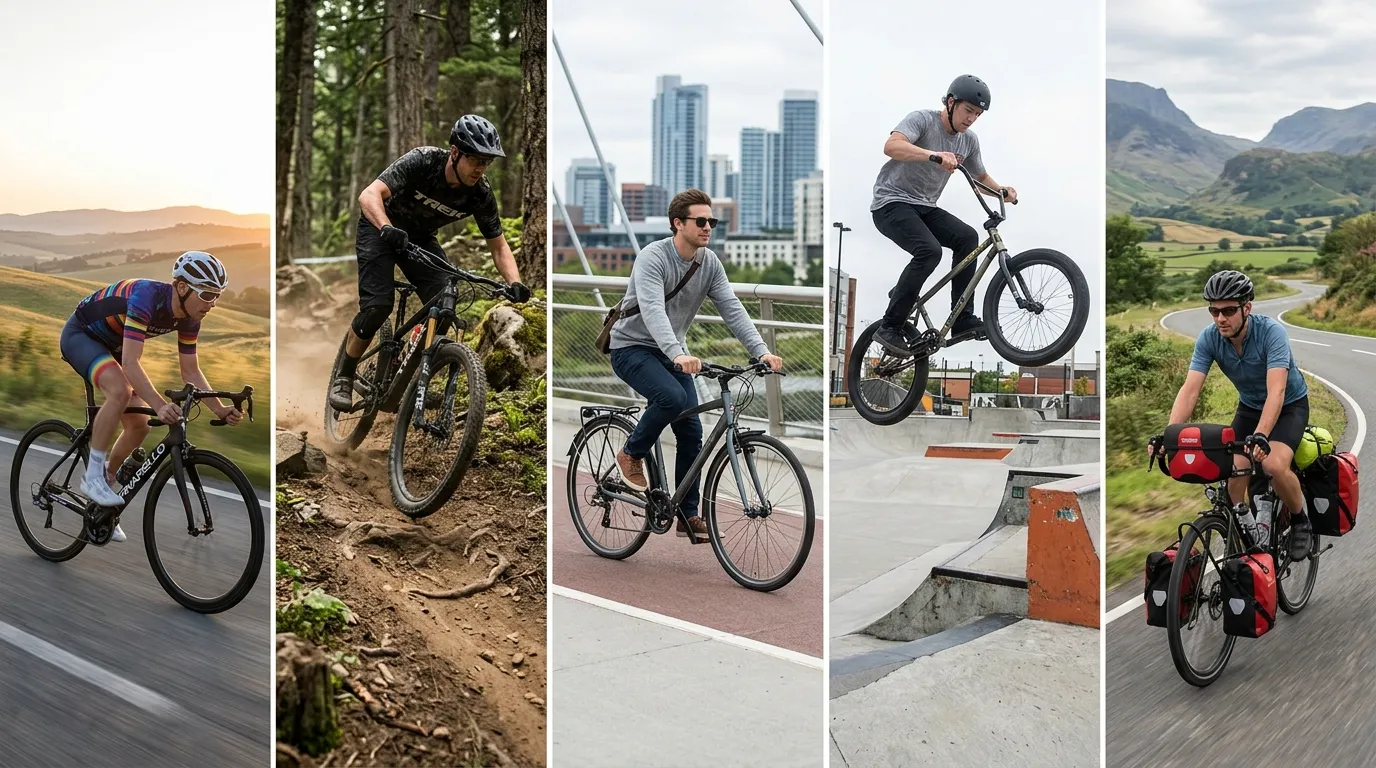
Road bikes are engineered specifically for speed, efficiency, and long-distance travel on smooth, paved surfaces. You can easily spot them by their distinct “drop” handlebars, which curve downward, allowing the rider to lean forward into an aerodynamic posture. This position reduces wind resistance, making it much easier to maintain high speeds.
These bikes feature lightweight frames typically crafted from aluminum, carbon fiber, or titanium. The tires are narrow and smooth, designed to decrease rolling resistance and glide effortlessly over the tarmac. If your primary goal is fitness riding, participating in group rides, or commuting on well-maintained streets, a road bike is an excellent choice.
Within the road bike category, there are further sub-divisions. Aero road bikes prioritize cutting through the wind, endurance road bikes offer a slightly more upright geometry for comfort on long rides, and race bikes focus entirely on stiffness and weight reduction. If you are looking for top-tier road cycling innovation, exploring collections from Specialized can give you a great idea of what modern road bikes are capable of.
Mountain Bikes: Conquer the Trails
When the pavement ends and the dirt begins, mountain bikes take over. These rugged machines are built to withstand the punishing impacts of rocks, roots, and steep drops. Mountain bikes feature flat, wide handlebars for enhanced steering control and highly durable frames that can take a beating.
The most defining characteristic of a mountain bike is its suspension system. A “hardtail” mountain bike features a suspension fork only in the front, making it lighter and more efficient for climbing hills. A “full-suspension” bike has shock absorbers in both the front and the rear, providing maximum traction and comfort on highly technical, bumpy descents.
Mountain bikes also utilize wide, knobby tires that grip loose dirt and mud effectively. The gearing is usually set very low, allowing riders to pedal up incredibly steep off-road inclines. Whether you want to try cross-country racing or aggressive downhill trails, a mountain bike provides the durability you need. Proper bike maintenance is essential for these machines, as dirt and grit can quickly wear down the drivetrain and suspension components.
Hybrid Bikes: The Best of Both Worlds
If you find yourself torn between the speed of a road bike and the comfort of a mountain bike, the hybrid bike is your ideal solution. Hybrid bikes blend the best features of both worlds to create a highly versatile machine perfect for casual riders, commuters, and fitness enthusiasts.
A standard hybrid bike utilizes the flat handlebars and upright riding posture of a mountain bike, which offers excellent visibility and reduces strain on your neck and lower back. However, it incorporates the lighter frame and narrower, faster-rolling tires of a road bike. This combination allows you to ride efficiently on paved roads while still maintaining the ability to cut across packed gravel paths or park trails.
Many hybrids come equipped with mounts for cargo racks, fenders, and lights, making them the ultimate utilitarian choice for running errands or commuting to work. If you want a single bike that does a little bit of everything reasonably well, you cannot go wrong with a hybrid.
BMX Bikes: Made for Tricks and Jumps
BMX (Bicycle Motocross) bikes are entirely different from traditional bicycles. They are compact, incredibly sturdy, and designed specifically for short, intense bursts of speed, jumps, and performing acrobatic tricks.
BMX frames are usually made of strong chromoly steel to survive harsh landings at skate parks or dirt tracks. They feature small 20-inch wheels, a single gear ratio, and very basic braking systems (sometimes lacking front brakes entirely to allow the handlebars to spin 360 degrees). You will not use a BMX bike for a long commute or a fitness ride. Instead, these are niche bikes tailored for riders looking to master bunny hops, grinds, and aerial stunts.
Touring Bikes: Your Long-Distance Companion
Touring bikes look very similar to road bikes but are modified specifically to carry heavy loads over massive distances. If you dream of packing a tent, sleeping bag, and a week’s worth of clothing onto your bicycle to travel across the country, a touring bike is what you need.
These bikes feature an elongated wheelbase, which provides a highly stable ride even when the bike is weighed down with heavy panniers (saddlebags) on both the front and rear wheels. The frames are typically made of steel because steel offers a smooth, shock-absorbing ride and is incredibly durable. Touring bikes feature a relaxed, upright geometry compared to race bikes, ensuring you remain comfortable during consecutive eight-hour days in the saddle. Furthermore, they are equipped with an ultra-low gear range, allowing you to slowly but steadily pedal a heavily loaded bike up steep mountain passes.
Gravel and Adventure Bikes: Versatility Unleashed

Gravel bikes represent one of the fastest-growing categories in the cycling world. At first glance, they look exactly like road bikes, complete with drop handlebars and an aerodynamic shape. However, look closer, and you will notice key differences designed for off-road capability.
Gravel bikes have much wider clearance in the frame and fork to accommodate thick, knobby tires. This allows the bike to roll smoothly over chunky gravel roads, dirt trails, and cobblestones while retaining the speed and efficiency of a road bike on the pavement. They feature a more stable, relaxed geometry than a pure road racing bike and typically include disc brakes for superior stopping power in muddy or wet conditions. If you want to explore backroads without being slowed down by the heavy weight of a mountain bike, a gravel bike is the perfect tool.
Cruiser Bikes: Casual and Comfortable
Cruiser bikes prioritize comfort and style above all else. They are built for leisurely rides along the beach boardwalk, through quiet suburban neighborhoods, or across flat city parks.
Cruisers feature large, balloon-like tires that naturally absorb bumps in the road, wide “swept-back” handlebars that keep you sitting perfectly upright, and oversized, heavily padded saddles. They usually feature simple single-speed or three-speed drivetrains and coaster brakes (where you pedal backward to stop). These are not bikes for speed or climbing hills; they are designed purely for the joy of a relaxed, sunny afternoon ride.
Electric Bikes (E-Bikes): Power Your Ride
Electric bikes, or e-bikes, have revolutionized the cycling industry by integrating a battery-powered motor to assist your pedaling. E-bikes come in almost every style mentioned above—you can buy electric road bikes, electric mountain bikes, and electric hybrids.
The motor provides varying levels of assistance, allowing you to conquer steep hills without breaking a sweat, commute to work without needing a shower upon arrival, or keep up with faster riders in your group. Industry leaders like Trek offer a massive variety of reliable, high-performance e-bikes that cater to every demographic, from elderly riders looking to stay active to hardcore mountain bikers wanting to squeeze more downhill runs into a single afternoon.
Folding Bikes: Compact Commuting Solutions
For city dwellers with limited apartment space or commuters who need to take their bike onto a train or bus, folding bikes are a mechanical marvel. These bikes feature hinges in the frame and steering column, allowing them to collapse into a footprint small enough to fit under a desk or in the trunk of a car.
Folding bikes typically use small 16-inch or 20-inch wheels to minimize their folded size. While they are incredibly convenient, the smaller wheels mean they do not roll as smoothly over potholes as a full-sized bike.
Structured Comparison Table of Bike Types
To help you easily digest the differences, here is a quick comparison table of the most popular types of bicycles:
|
Bike Type |
Ideal Terrain |
Handlebar Style |
Tire Type |
Primary Use Case |
|---|---|---|---|---|
|
Road Bike |
Paved roads |
Drop (curved) |
Narrow, smooth |
Speed, fitness, group rides |
|
Mountain Bike |
Dirt trails, rocks |
Flat, wide |
Wide, knobby |
Off-road exploration, technical descents |
|
Hybrid Bike |
Paved paths, light gravel |
Flat |
Medium, lightly treaded |
Commuting, casual fitness |
|
BMX Bike |
Skate parks, dirt tracks |
BMX (high rise) |
Small (20″), thick |
Tricks, jumps, stunts |
|
Touring Bike |
Paved roads, touring paths |
Drop (curved) |
Medium, durable |
Multi-day travel, carrying heavy cargo |
|
Gravel Bike |
Gravel roads, dirt, pavement |
Drop (flared) |
Wide, knobby |
Mixed-surface riding, bikepacking |
|
Cruiser Bike |
Flat pavement, boardwalks |
Swept-back |
Wide, balloon |
Casual, comfortable leisurely rides |
Common Mistakes to Avoid When Choosing a Bike

Even when you know the types of bicycles available, it is easy to make purchasing errors that compromise your riding experience. Avoid these common pitfalls:
- Buying the Wrong Size Frame: A bike that is too large or too small will cause severe back, knee, and neck pain. Always consult a sizing chart or get professionally fitted at a local bike shop.
- Ignoring the Bike’s Purpose: Do not buy a heavy full-suspension mountain bike if you only plan to ride on paved city streets. Match the bike strictly to the terrain you will ride most often.
- Overlooking Comfort for Aesthetics: A sleek racing bike might look amazing, but if your body lacks the flexibility for an aggressive aerodynamic posture, you will be miserable. Prioritize comfort and geometry over looks.
- Skimping on Quality: Big-box store bikes might be cheap, but they are often built with heavy, low-quality components that break easily. Investing in an entry-level bike from a reputable brand will save you money on repairs in the long run.
- Forgetting About Accessories: When budgeting for your new ride, remember to factor in essential cycling gear like a high-quality helmet, a secure lock, lights, and a basic repair kit.
Expert Tips for Selecting the Right Ride
To ensure you walk away with the best possible bicycle for your unique needs, keep these expert strategies in mind:
- Test Ride Multiple Styles: Never buy a bike without sitting on it first. Test ride a road bike, a hybrid, and a gravel bike back-to-back to physically feel the difference in posture, handling, and acceleration.
- Think About Future Goals: If you are a beginner but want to eventually participate in 50-mile charity rides, do not buy a heavy cruiser. Purchase a bike that you can grow into as your skills and fitness improve. Check out our beginner tips for setting realistic cycling goals.
- Consider the Gearing: If you live in a very hilly area, ensure the bike you select has a wide range of gears with a “granny gear” for easy climbing. If you live in a perfectly flat city, a simpler drivetrain with fewer gears requires less maintenance.
- Evaluate the Brakes: Disc brakes offer vastly superior stopping power in wet weather compared to traditional rim brakes. If you plan to commute year-round in the rain, disc brakes are a non-negotiable feature. Top manufacturers like Giant equip almost all their modern bikes with reliable hydraulic or mechanical disc brakes.
Conclusion
Understanding the various types of bicycles is the key to unlocking a healthier, more adventurous lifestyle. Whether you need the blistering speed of a road bike, the rugged durability of a mountain bike, or the versatile utility of a hybrid, there is a perfect machine waiting for you. By avoiding common sizing mistakes and honestly evaluating the terrain you intend to ride, you ensure that every pedal stroke brings joy rather than frustration. Ready to start your cycling journey? Visit your local bike shop today, test ride a few different models, and discover the freedom that only two wheels can provide!
Frequently Asked Questions (FAQs)
1. What is the best type of bike for a complete beginner?
For most beginners, a hybrid bike is the best starting point. It offers a comfortable, upright riding posture, flat handlebars for easy control, and tires that are versatile enough to handle both smooth pavement and packed dirt trails.
2. Can I ride a mountain bike on paved roads?
Yes, you can ride a mountain bike on the road, but it will require more effort. The heavy frame, suspension system, and wide knobby tires create significant rolling resistance, making it much slower and more tiring to pedal on pavement compared to a road or hybrid bike.
3. How do gravel bikes differ from cyclocross bikes?
While both feature drop handlebars and off-road tires, cyclocross bikes are designed specifically for short, intense, muddy races. They have aggressive geometry and tighter tire clearance. Gravel bikes are designed for long-distance comfort, featuring more relaxed geometry and mounts for carrying water and luggage.
4. Are electric bikes considered “cheating” for fitness?
Not at all. Studies show that e-bike riders often get just as much exercise as traditional cyclists because the motor assistance encourages them to ride more frequently, tackle longer distances, and take on steeper hills they would otherwise avoid.
5. Why are road bike seats so narrow and hard?
Road bike saddles are narrow to prevent chafing and allow the rider’s legs a full range of motion while pedaling at high cadences. They rely on the rider wearing padded cycling shorts for comfort rather than placing the padding directly on the saddle.
6. Do I really need a full-suspension mountain bike?
If you are riding smooth dirt paths, gravel, or gentle woodland trails, a hardtail (front suspension only) is plenty. You only truly need full suspension if you are riding highly technical trails with large rocks, deep roots, jumps, and steep drop-offs.
7. How much should I spend on a decent entry-level bicycle?
For a quality entry-level bike from a reputable manufacturer, expect to spend between $500 and $800. This price point ensures you get a lightweight aluminum frame, reliable shifting components, and wheels that will stay true.
8. What is the difference between carbon fiber and aluminum frames?
Aluminum is strong, lightweight, affordable, and excellent for entry-level to mid-range bikes. Carbon fiber is exceptionally light, incredibly stiff, and absorbs road vibrations better than aluminum, but it is significantly more expensive and generally reserved for high-performance bikes.
9. Can I convert a standard bicycle into an e-bike?
Yes, there are aftermarket conversion kits available that allow you to attach a motorized hub wheel or mid-drive motor and a battery to a standard bike. However, purpose-built e-bikes generally offer better weight distribution, cleaner wiring, and safer braking systems suited for the added speed.
10. How often do I need to perform maintenance on my bicycle?
You should perform basic maintenance, such as inflating your tires and cleaning/lubricating your chain, every week or two depending on how often you ride. A comprehensive tune-up by a professional mechanic should be done once or twice a year to ensure your brakes and gears function perfectly.